
- What is KAMENOI HOTEL?
- Hotel list
- DNA / History
- Hot springs- Natural Hot springs in all hotels
- Dining
- Activity
- KAMENOI HOTEL Travel Special
- Loyalty Program
GoTo Pass




Majestic
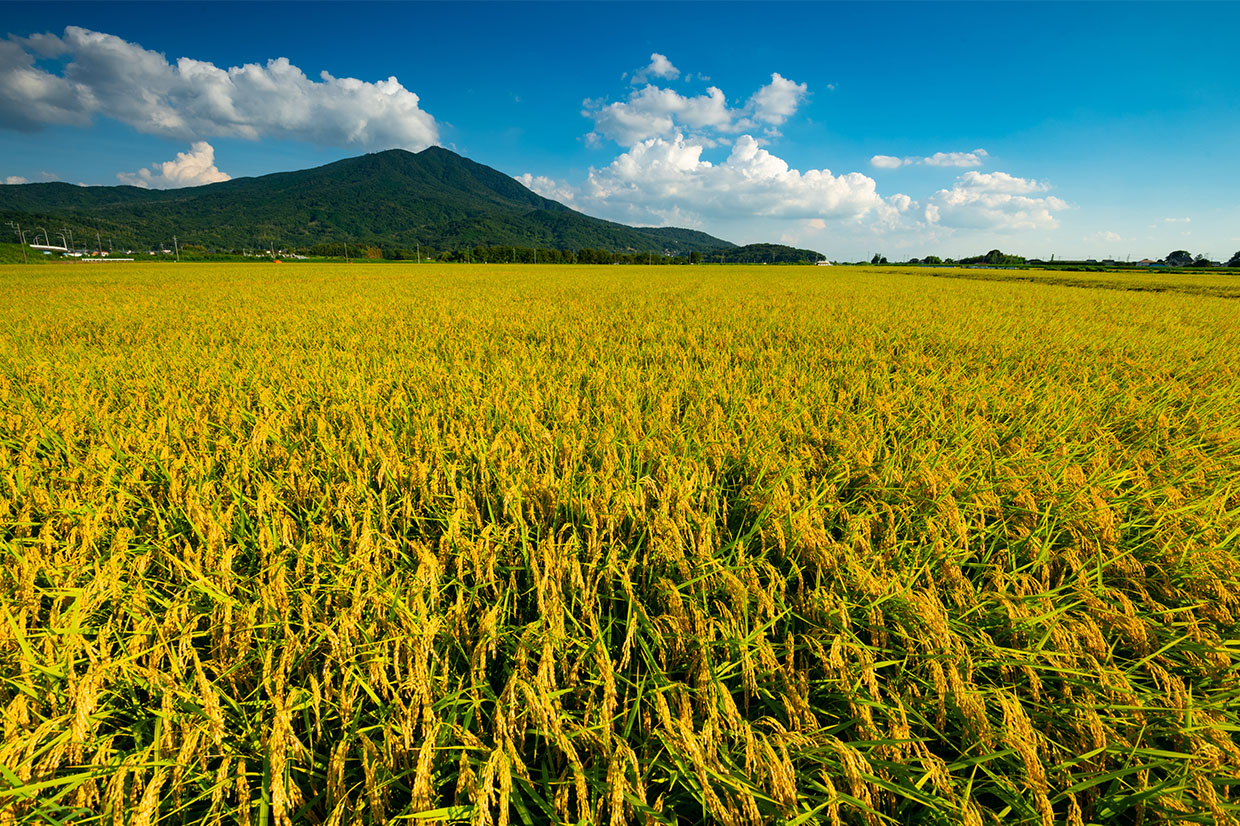
At the foot of Mount Tsukuba
A gourmet stay
The northern Kanto area consists of Gunma, Tochigi, and Ibaraki.
All of them are convenient for transportation, not to mention from Tokyo.
If you use Ibaraki Airport, you can use Sapporo or Kobe,
You can go back and forth to Fukuoka smoothly.
Ibaraki Tsukuba-shi is located in the northern Kanto region.
Not only are there numerous research institutes, but
Abundant nature such as Mt. Tsukuba spreads,
Great for traveling.
You can meet Mr./Ms. who is not known to the unknown North Kanto gourmet.
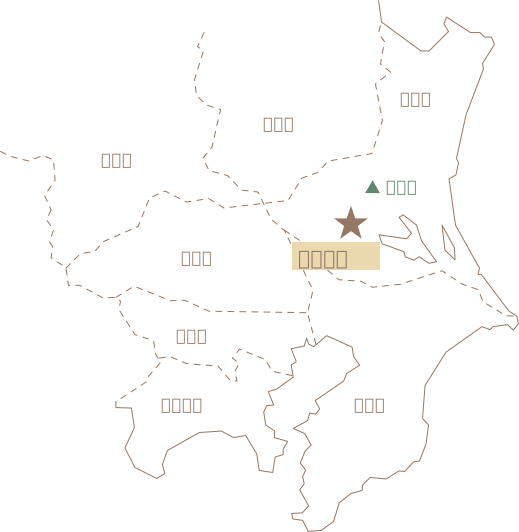
Nurtured by the Ibaraki climate
A rich food culture
Even in the northern Kanto region, the warm climate and fertile land spread out, and crops grow well in Ibaraki. At vegetable markets and roadside stations in the prefecture, local ingredients such as leafy vegetables, fruits, and mushrooms such as shiitake mushrooms and abalone mushrooms are lined up Mr./Ms.. Ibaraki is also known as one of the leading rice regions in Japan, and rice is planted in May, and golden rice ears can be seen in various places in autumn. In addition, off the coast of Ibaraki, where warm and cold currents meet, many fish are landed regardless of the season, and anko and bonito are famous in Oarai and Naka Minato.
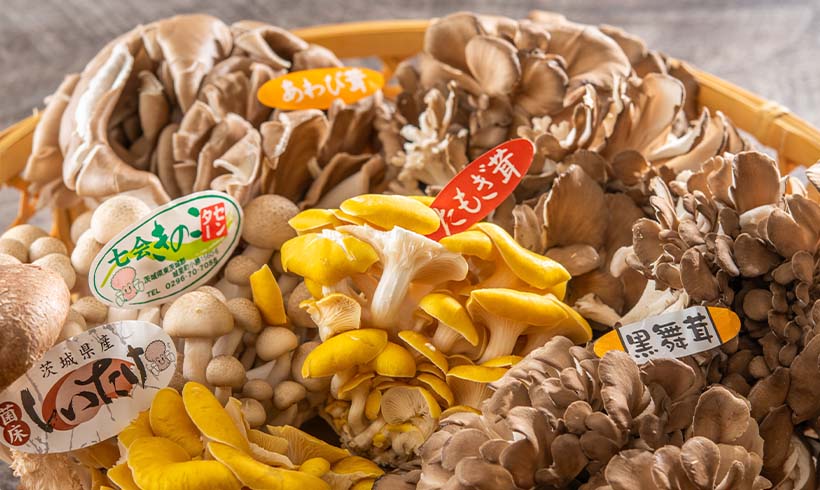

Full of flavour and a nostalgic feel
New Ibaraki Specialty
The delicious food of the land is known by the local people. With this in mind, KAMENOI HOTEL TSUKUBASAN visited famous restaurants, asked the owners and patrons about the flavors they loved locally, and researched local cuisine and local specialties. If Ibaraki is rich in vegetables and seafood, there must be something delicious that is not known. It takes about 7 months from the start of research to inspection, search for ingredients, development and prototyping, and then to the menu. Based on what I actually tasted and thought was this, I finished it as a new Ibaraki specialty that is unique to the hotel.
Secret story
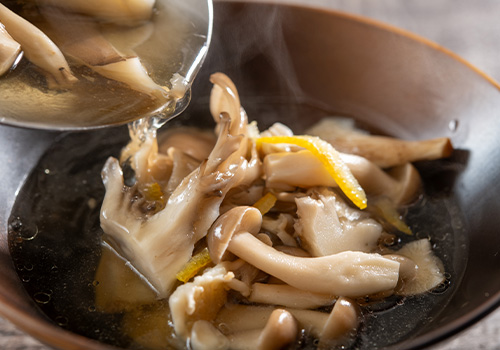
Ibaraki mushroom hotpot
The origin is a mushroom hot pot I met in Tochigi. We interviewed residents and alumni of the northern Kanto region, and focused on several shops before entering the site. Most of the development members were eating it for the first time, so expectations were high. Each store had its own personality, but the rich aroma, rich and powerful taste, and the interesting texture of each mushroom were common. I was enveloped in the excitement of "Is mushroom so delicious?" And. If it is served at the hotel, we want to stick to Ibaraki production, so we use mushroom bed mushrooms grown in Higashi-Ibaraki-gun Josato Town (formerly Shichikai Village area). To convey the umami of the mushrooms, we made an elegant soup with a slight aroma of broth with bonito and kelp.
Secret story
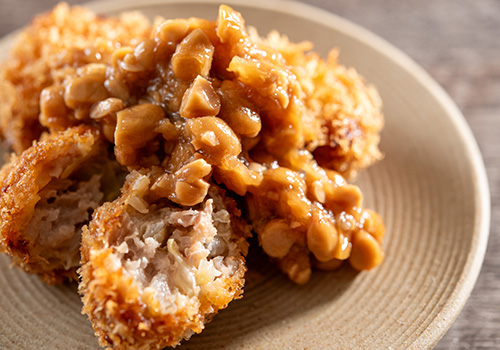
Natto cutlet
Natto is a specialty of Ibaraki. There are various theories about the origin of natto, but it is said that it spread from Minamoto no Yoshiie, who ate naturally fermented boiled beans while staying in Mito during the Heian period. Since small soybeans were grown in Mito, small-grain natto became mainstream, and when it was sold at Mito Station during the Meiji period, it gained a reputation for its delicious taste.
While researching this historic natto, I discovered a dish called natto tonkatsu. There were several restaurants serving it in Mito and Naka, so I decided to check them out. When I first tried it, I was shocked by how well natto and tonkatsu went together, and was convinced that it would become a popular menu item. So, thinking about serving it at a buffet, I decided to make it with minced meat cutlets, which are delicious even when cold.
"We carefully select the breadcrumbs, adjust the ratio of breadcrumbs to meat, and make many prototypes with different sizes. We also add grated daikon radish to the natto for a refreshing taste."

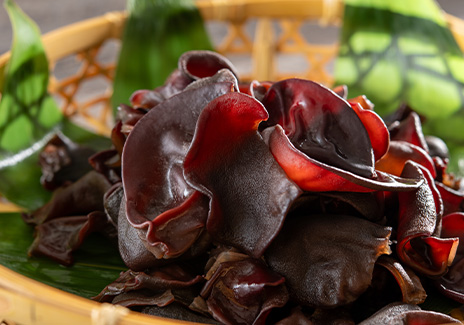
Ibaraki wood ear mushroom sashimi
Ibaraki is one of the top producers of wood ear mushrooms in Japan. The proud wood ear mushrooms are boiled fresh and served as sashimi. They have a pleasant crunchy texture and are recommended to be eaten with ginger soy sauce.
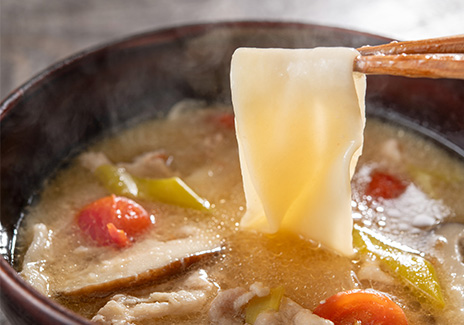
Zurubiki Udon
Zurubiki udon, a topping-filled dish that has long been popular in Ibaraki households. It got its name from the fact that people would slurp the noodles from the pot into their own bowls with chopsticks. This new type of zurubiki udon is served kamaage style, with wide noodles and chicken broth containing grated lotus root, pork, and mushrooms.
Recommended
Hotel
Recommended hotels
Enjoy the view, relax,
Enjoy nutritious cuisine
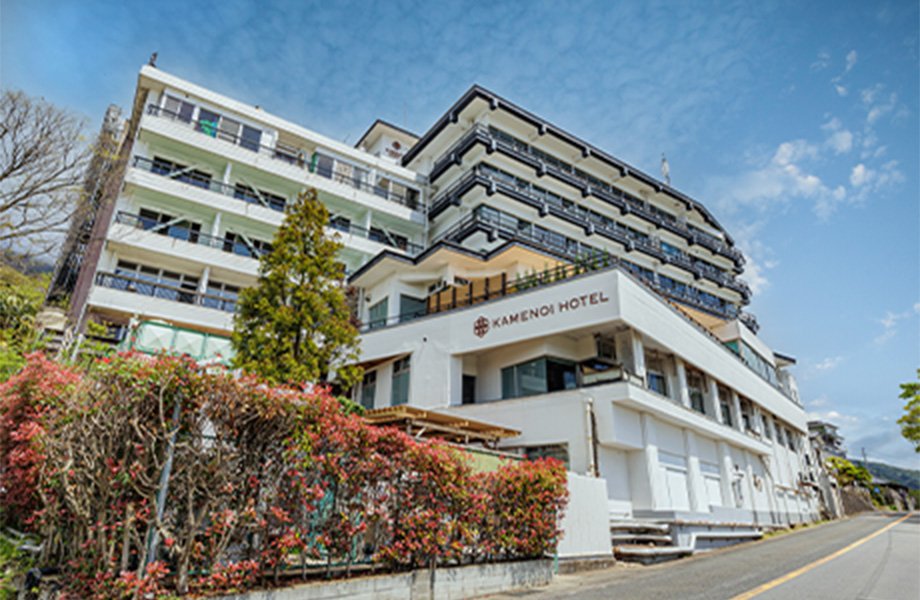
KAMENOI HOTEL TSUKUBASAN
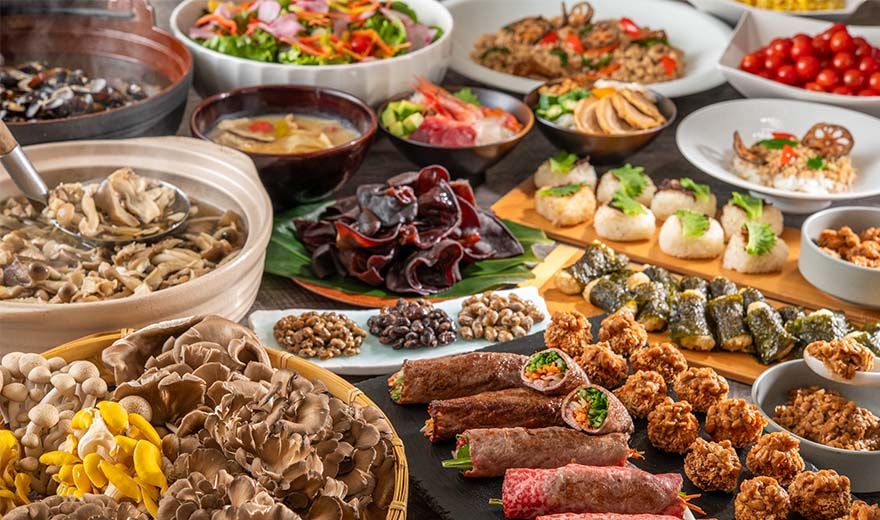
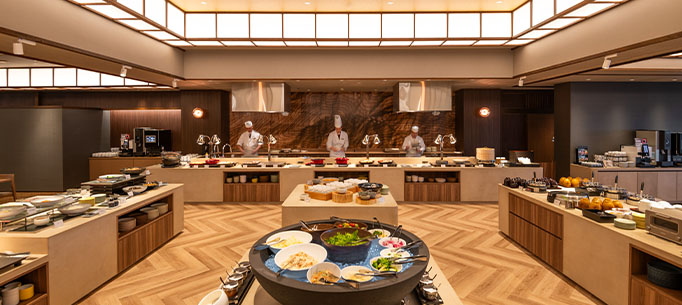
You can only find this here
Northern Kanto gourmet food for breakfast and dinner
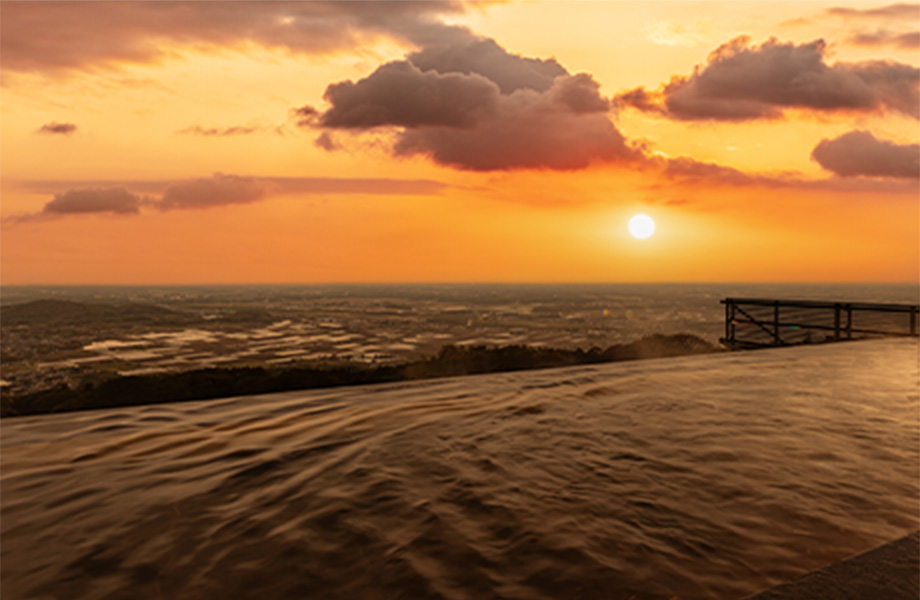
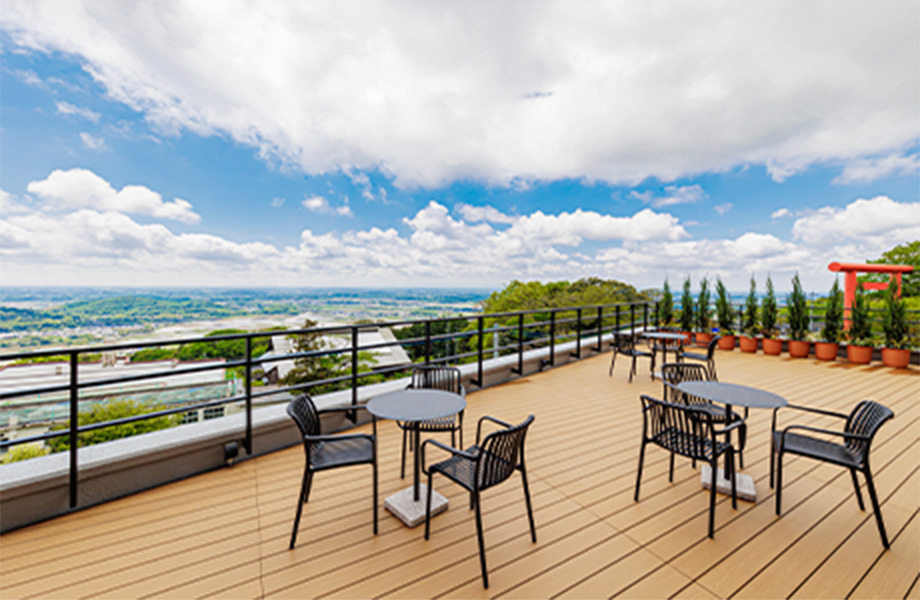
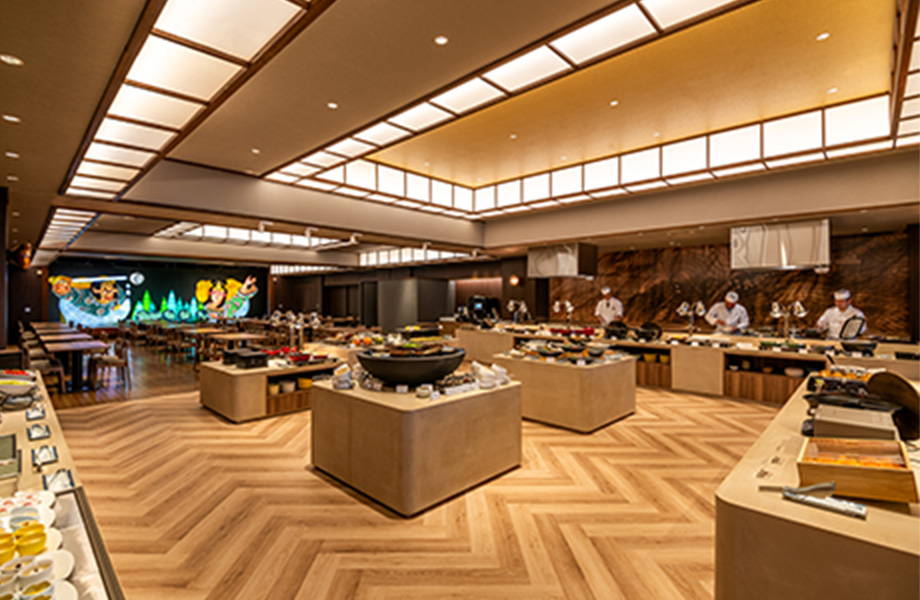
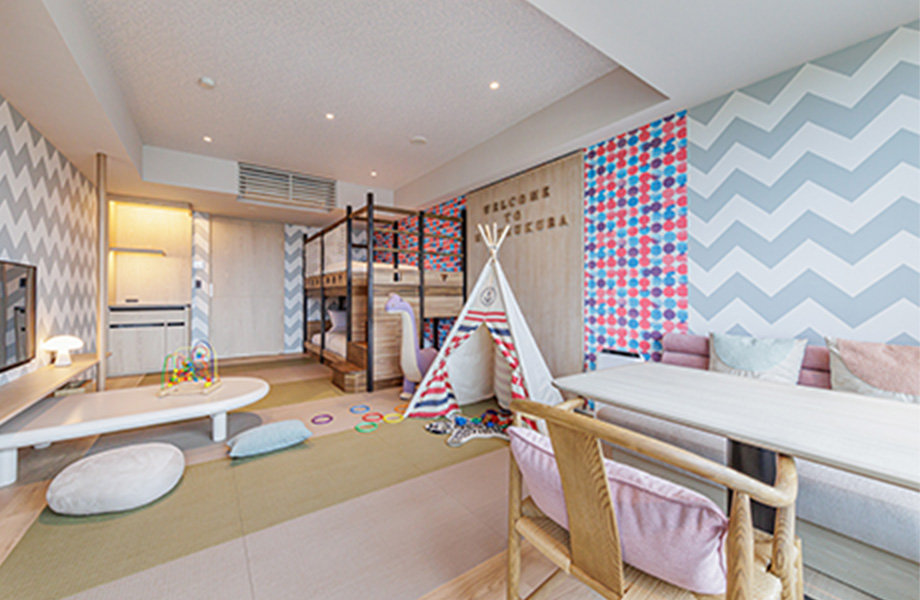
KAMENOI HOTEL TSUKUBASAN was rebranded and reopened on Tuesday, April 23rd. In addition to Guest rooms and open-air baths with spectacular views, the hotel now has a restaurant that serves breakfast and dinner buffets. The hotel conveys the food culture of Ibaraki and other areas of northern Kanto, and offers dishes made with seasonal local ingredients. You'll surely be amazed by the appeal of northern Kanto cuisine.


Breakfast
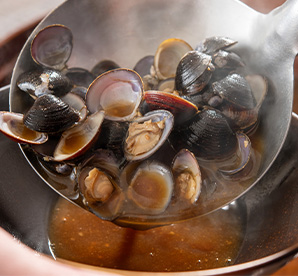
Produced in Hinuma Ibaraki
Yamato clam miso soup
Hinuma, a brackish lake into which seawater flows, is a producer of shijimi clams. We carefully picked shijimi clams in baskets to avoid damaging them, and made miso soup with them. They are rich in flavor and nutrients.
Breakfast
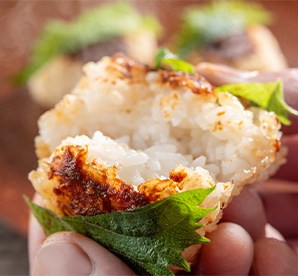
Spicy miso grilled rice balls
We have made grilled rice balls with spicy miso, a specialty of Kasama City. They are grilled until fragrant and wrapped in fresh shiso leaves. They are so delicious you will want more.
Breakfast
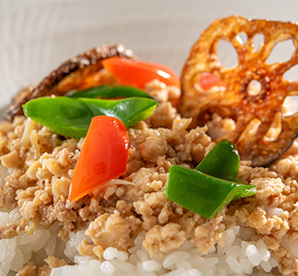
Ibaraki Gapao
A new specialty of Ibaraki that can be eaten at about 20 restaurants in the prefecture. Gapao rice, a Thai dish, is arranged with lotus root, which boasts the No. 1 production volume in Japan, and Ibaraki chicken, eggs, and rice.
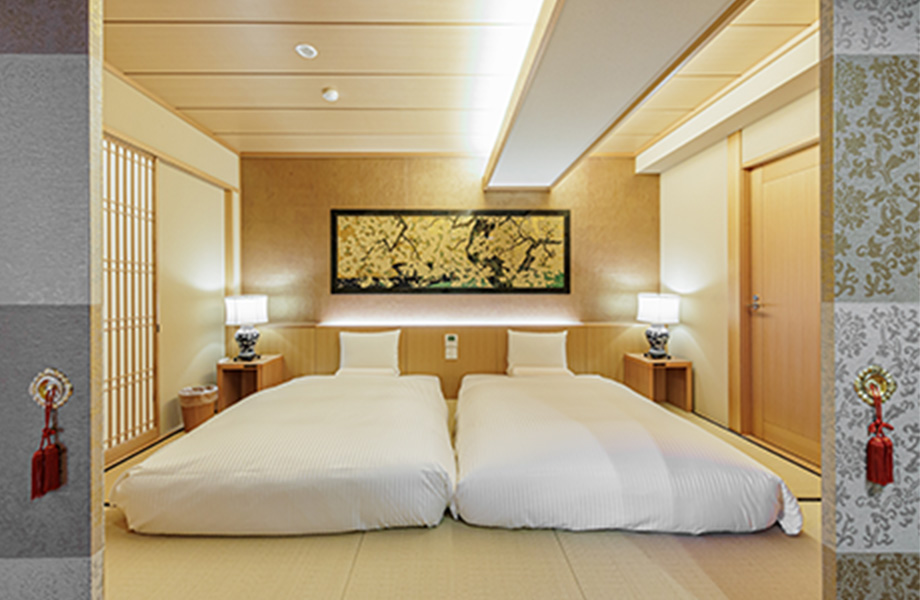
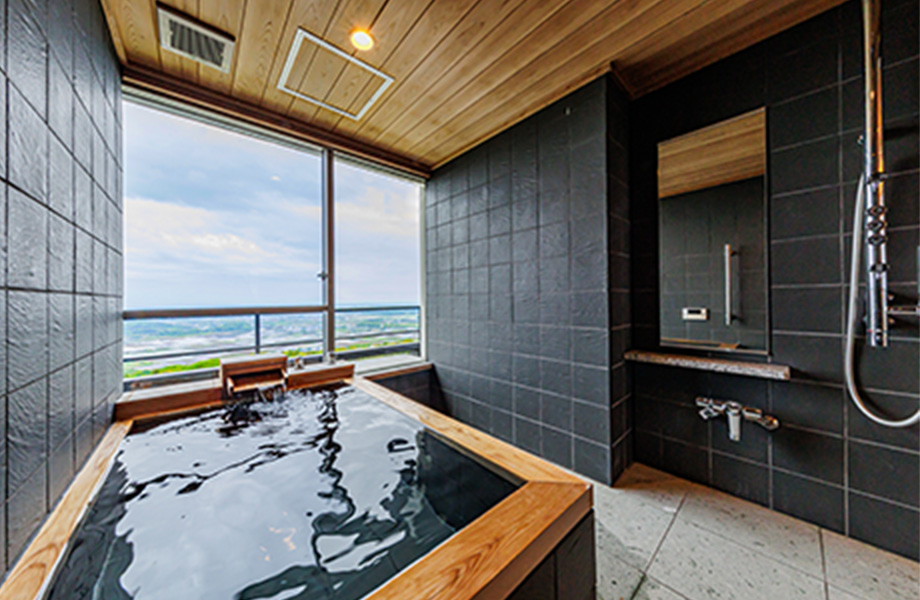
Nearby Spots
Nearby spots
Climbing Mount Tsukuba, a mountain of faith,
Sweat comfortably
Mount Tsukuba has a trailhead about 10 minutes on foot from KAMENOI HOTEL TSUKUBASAN Tsukuba. It is said to be "Fuji of the West, Tsukuba of the East," and is also called "Purple Peak" because the color of the mountain changes in the mornings and evenings. At 877m above sea level, it is the lowest of the 100 famous mountains in Japan, so even beginners should be able to climb it without difficulty. At this time of year, you can trek while admiring the alpine plants and strangely shaped rocks.
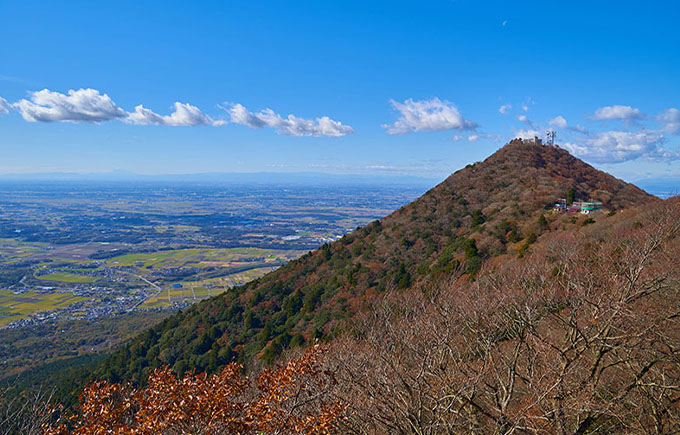
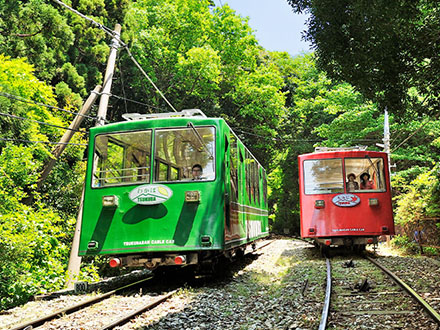

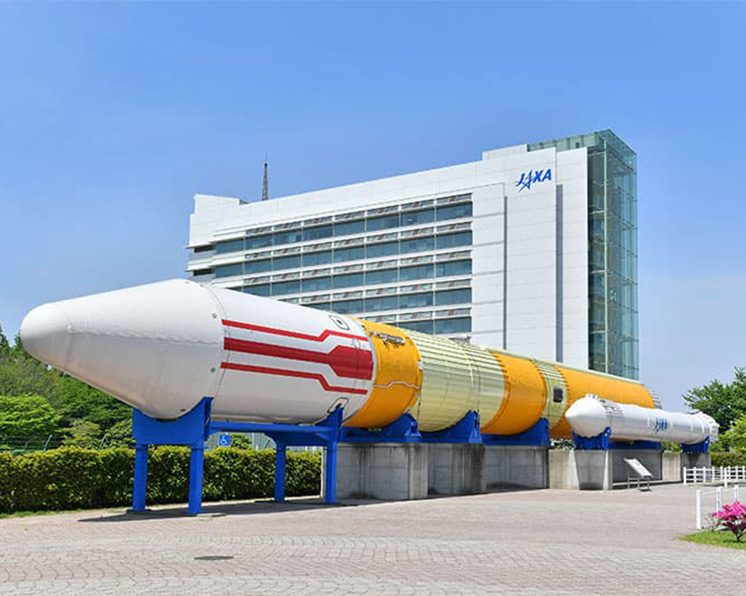 @JAXA
@JAXA
Tsukuba Space Center
At the central center of Japan's space development, you can see various efforts being made for space development. Outside, there is an actual H-II rocket, which is 50 meters long and was developed over a period of about 10 years, on display.
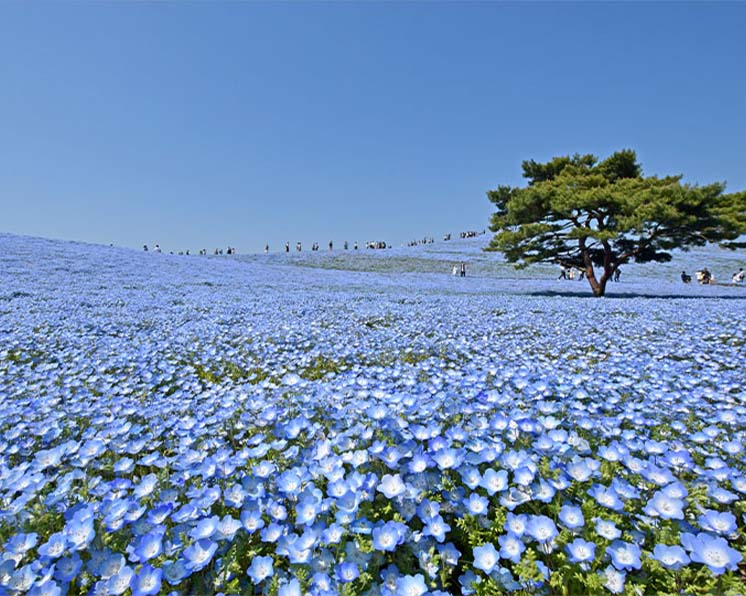
Hitachi Seaside Park
This park boasts an area of 216 hectares, and in spring, tulips, nemophila, poppies, and more bloom in full bloom. There is also an amusement park where you can have fun riding the Ferris wheel and roller coaster.
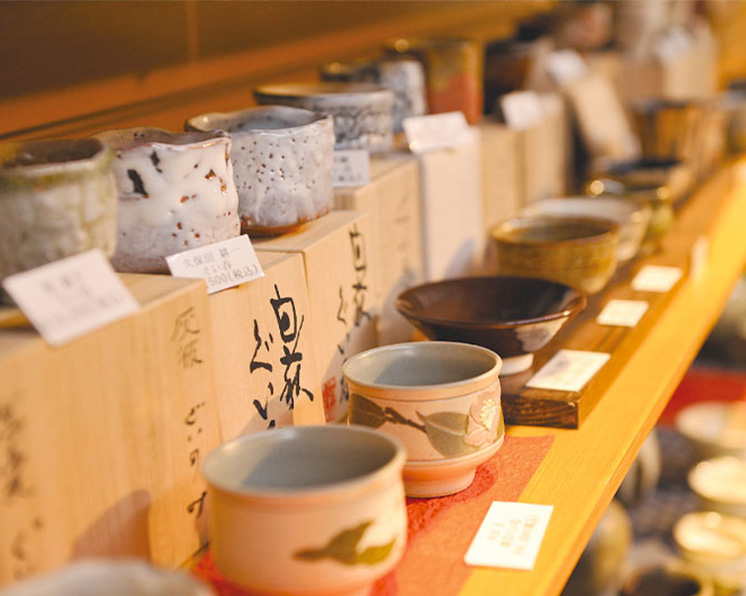
Kasama
Kasama City is the home of Kasama ware, which has been around since the Edo period. Kasama ware has the longest history in the Kanto region, but it is free of customs and traditions. You're sure to find a unique piece of pottery that you'll love.
"It's packed with mellow-smelling black maitake mushrooms, rich, tasty golden tamogi mushrooms, and abalone mushrooms, known for their dashi stock. The rustic flavor of the mushroom hotpot is enhanced with the freshness of local Fukurai mandarin orange peel."